
Introduction
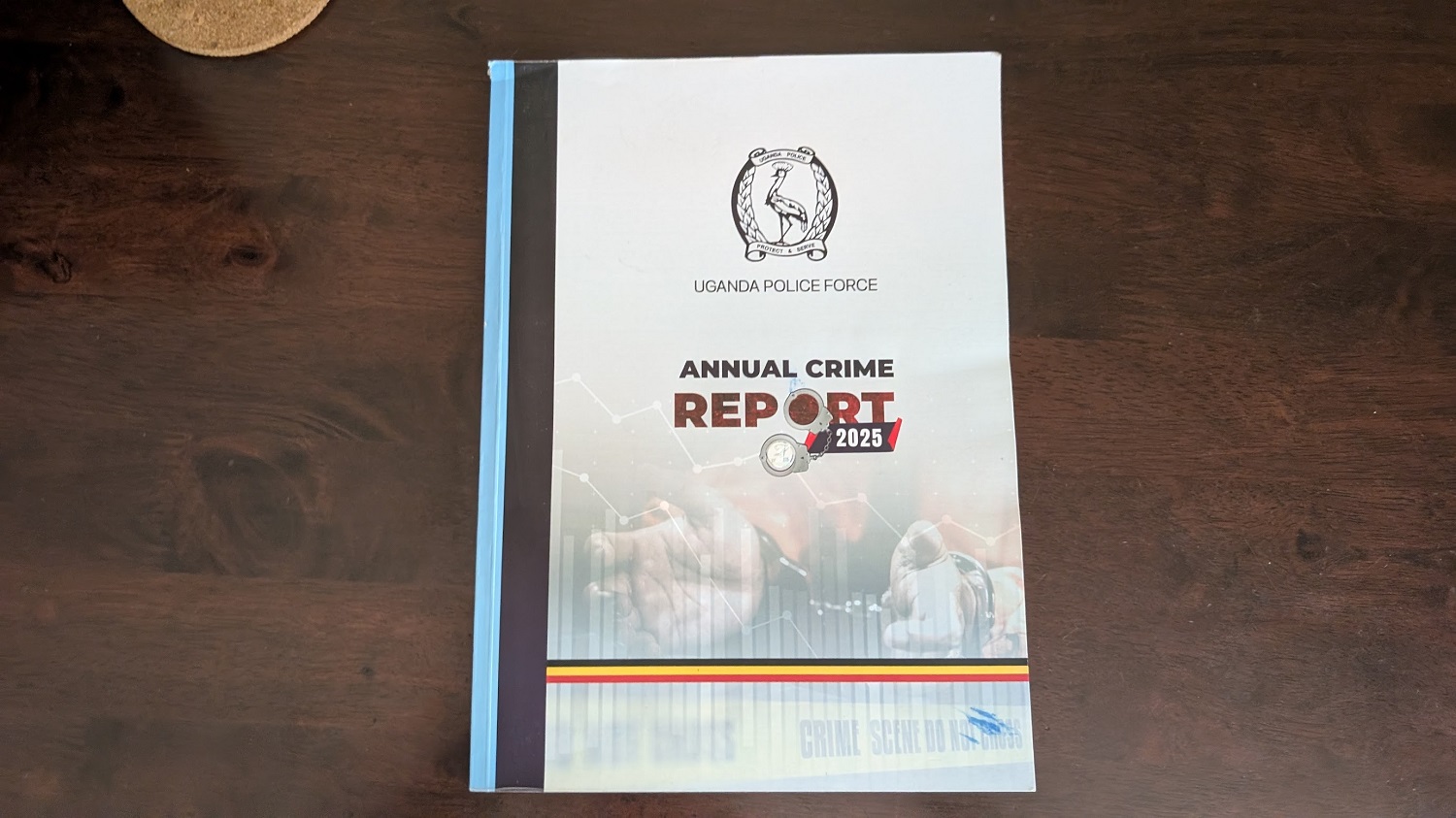
On 30th March 2026, the Uganda Police Force released the 2025 Annual Crime Report, outlining key trends, achievements, and ongoing efforts in combating crime nationwide. While most analyses emphasize headline figures—such as violent crime rates, theft, and corruption—this article explores an often-overlooked dimension: land governance. Beyond being an administrative challenge, weak land governance frequently acts as a catalyst for crime.
Land and Crime in Uganda: The Nexus
Secure land rights provide a strong foundation for an orderly and prosperous society. Yet, numerous mishandled and unresolved land conflicts pose a serious threat to the social cohesion enjoyed in many parts of Uganda. These disputes often carry a dual nature—attracting both civil and criminal liability—and expose the complex interplay between different bodies of law. As a result, weak land governance not only undermines access to land justice but also fuels criminal activity, making land a critical dimension of Uganda’s crime landscape.
Uganda’s Land Act – the principal land legislation – creates many offences that embody criminal law aspects. For example, the Act outlines key offences and penalties related to land governance. These include fraudulent acquisition of freehold land by non-citizens, false declarations concerning land matters, and unauthorized occupation of another person’s land. It also prohibits corruption within land governance structures, where members solicit or receive payments beyond what the law permits. Furthermore, it makes illegal any attempt to evict, or actual eviction of, lawful occupants from registered land without a valid court order. Collectively, these provisions underscore the criminal dimensions of land management and highlight how abuse of land rights can directly lead to criminal activity.
Relatedly, the Penal Code Act, which establishes Uganda’s criminal law framework, defines several offences that frequently arise in the context of land disputes. These include affray (fighting in public), threatening or inciting violence, common assault and assault occasioning actual bodily harm, criminal trespass, and offences related to boundary marks such as their removal or willful damage. Together, these provisions illustrate how land conflicts often escalate into criminal acts, reinforcing the link between weak land governance and broader challenges to law and order.
As the report shows, the Uganda Police Force and Office of Directorate of Public Prosecutions, pursuant to their mandate, have preferred these charges against the perpetrators and have prosecuted them in the courts of law. As a matter of fact, the Uganda Police Force has a Land Protection Unit mandated to handle the criminal aspects of land conflicts. This demonstrates that land has a strong criminal dimension.
The Numbers
According to the 2025 report, under the category of Land Fraud Cases (page 56), it is reported that in 2025, a total of 663 land fraud cases were reported, representing a 67% increase from 2024. These cases entailed fraudulent procurement of certificate of titles, obtaining registration by false pretenses, criminal trespass, obtaining money by false pretenses and forgery.
The report notes that out of 663 land-related cases, 398 remain under inquiry, 333 were submitted to the Director of Public Prosecutions for legal guidance, 145 were advised to seek civil remedies, and 74 proceeded to court. However, these figures, if summed up, exceed the reported total, suggesting overlaps between categories or inconsistencies in how the cases were classified. This highlights a gap in the reporting framework, where the same case may be counted at different stages, making it difficult to establish a clear picture of outcomes.
Looking at other categories of criminal cases in the report, it is evident that many could have land dimensions. Offences such as criminal trespass, threatening violence, arson, domestic violence, and malicious damage to property in some cases arise in the context of land disputes. However, because the report does not disaggregate these crimes to show whether they were linked to land, it is not possible to analyze them further or establish clear land-related connections. In light of this limitation, the analysis here will focus only on cases expressly reported as land-related.
What do the numbers reveal?
The above figures under the land fraud cases category themselves reveal important insights about land, crime, and access to justice in Uganda. First, the high proportion of cases still under inquiry points to delays in resolving land-related disputes, prolonging uncertainty and increasing the risk of further conflict. Second, the significant reliance on prosecutorial guidance highlights how land disputes often carry criminal dimensions that demand formal legal scrutiny. Third, a notable share of cases is redirected to civil processes, underscoring the blurred line between civil and criminal liability in land matters. While it is lawful or even expedient to re-direct cases, this duality can further complicate access to land justice, as victims may struggle to determine the appropriate forum. Finally, the small number of cases that progress to trial reflects limited access to formal adjudication for land-related criminal cases. This outcome might suggest systemic bottlenecks and raises concerns about accountability/punishment and deterrence which is the crux of criminal law.
Key Takeaways for Land governance Actors
The 2025 Uganda Police Annual Crime Report underscores that land governance is not only an administrative issue but also a criminal justice concern, offering critical lessons for stakeholders seeking to strengthen accountability, access to justice, and social stability.
- Strengthen dispute resolution capacity: The high proportion of cases stuck at the inquiry stage signals delays that prolong uncertainty and fuel conflict. Stakeholders should prioritize faster, and more efficient mechanisms for investigating criminal cases arising out of land disputes to expedite resolution and prevent escalation.
- Recognize the criminal dimensions of land disputes: The reliance on prosecutorial guidance shows that land disputes often carry criminal elements. Land governance actors must work closely with the criminal justice institutions, especially Police and ODPP to integrate land administration into criminal justice.
- Clarify civil–criminal overlaps: The frequent redirection of cases to civil processes highlights blurred boundaries between civil and criminal liability in land governance. Stakeholders should develop clearer frameworks and guidance to help communities and practitioners navigate the appropriate forum for redress in land-related cases.
- Expand access to formal adjudication: The small number of cases reaching trial reflects systemic bottlenecks and limited access to courts. Strengthening the Police and ODPP’s capacity to investigate and prosecute crimes arising out of land cases will improve accountability and deterrence as it enables the courts to up with just outcomes.
- Improve data and reporting systems: Inconsistencies in case classification and the lack of disaggregated data on land-related dimensions of other crimes hinder effective policy responses. Stakeholders should invest in better data collection and reporting frameworks to capture the full scope of land-related crime.
Conclusion
The 2025 Uganda Police Annual Crime Report makes clear that land governance is inseparable from the country’s crime and justice landscape. Contested land rights not only undermine social cohesion but also fuel criminal activity, stretching the capacities of both civil and criminal justice systems. The findings highlight persistent delays, blurred legal boundaries, and gaps in data reporting all of which point to systemic weaknesses in how land disputes are managed. For land governance stakeholders, the message is clear: strengthening land governance is not simply an administrative reform but a critical step toward reducing crime, enhancing accountability, and ensuring equitable access to justice.